
What to expect at an indoor golf simulator lesson
By Priya Whitfield · Updated 2026-07-15
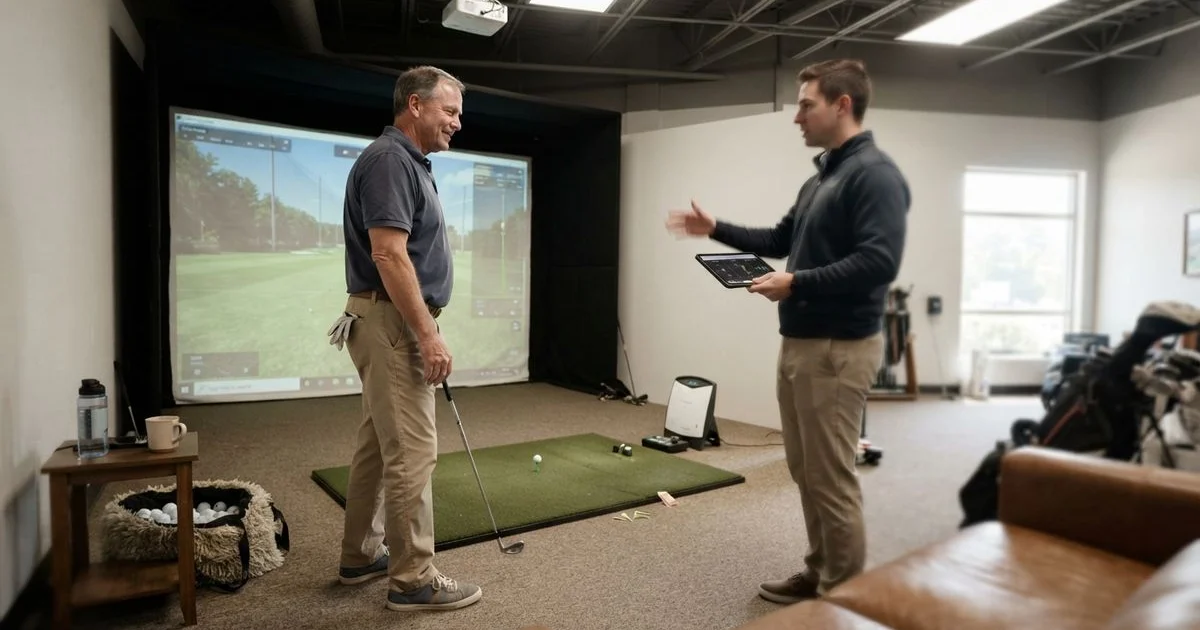
Indoor simulator lessons have become one of the most popular ways to get golf instruction in Charlotte, driven partly by the region’s summer heat and winter rain, and partly by how much data a modern setup can show you in a single session. If you’ve never booked one, here’s what actually happens once you walk into the bay.
Booking and arrival
Most indoor golf simulator venues in Charlotte let you book a bay online, choosing a time slot and whether you want an instructor present or just bay time to hit on your own. If you’re booking an actual lesson rather than open practice, confirm ahead of time whether the coach’s fee is separate from the bay rental, since pricing structures vary by facility. Bring golf shoes if you have them, though most bays use mats that work fine with regular sneakers, and don’t worry about clubs unless your instructor tells you otherwise. Booking for a birthday or work outing instead of a solo lesson works a little differently; the guide to booking a simulator lesson for a corporate or group event covers what to ask the venue.
What the technology actually measures
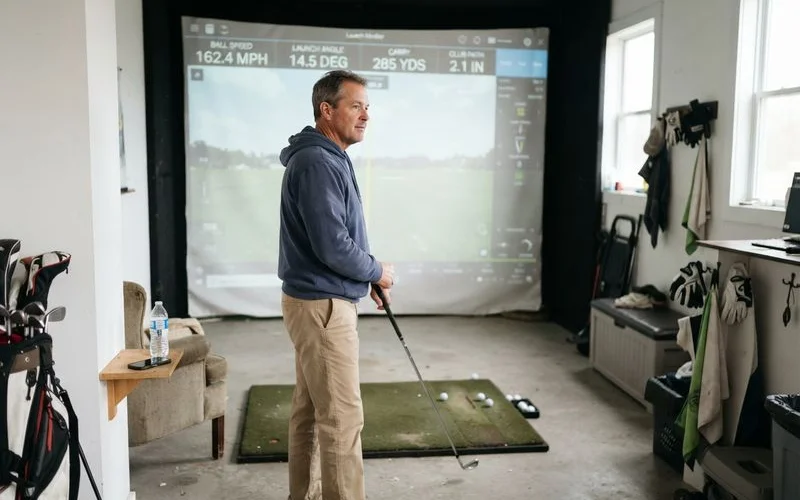
Once you’re set up, the simulator’s launch monitor (radar or camera-based, depending on the facility) starts tracking your shots the moment you hit. A typical setup captures:
- Ball speed and clubhead speed
- Launch angle and spin rate
- Carry distance and total distance
- Face angle and swing path at impact
A good instructor doesn’t just read these numbers off a screen at you. They connect a specific number to what you’re seeing on your shot, like explaining that a steep launch angle paired with high spin is why your drives are ballooning short of where you expect them to land.
| Session stage | What happens |
|---|---|
| Warm-up | A few swings to establish a baseline, often without much commentary |
| Diagnosis | Instructor watches your data and swing pattern to identify the main issue |
| Correction | Specific drill or adjustment tied to what the data showed |
| Verification | More reps to confirm the change is registering in the numbers, not just how it feels |
How it differs from an outdoor range lesson
The biggest practical difference is weather independence. A simulator session happens rain or shine, which matters in a market like Charlotte where summer humidity and winter cold cut into outdoor practice windows. The data feedback also tends to be more immediate and precise than eyeballing ball flight on a range, since you get exact numbers rather than a general sense of where the ball went. The trade-off is that you’re hitting into a screen rather than watching a real ball fly and land, which some golfers find takes getting used to, and a handful of reviewers across Charlotte facilities note that certain simulator setups can misread drive distance or spin on mishits, so treat extreme outlier numbers with a little skepticism rather than as gospel.
Radar versus camera-based systems
Charlotte simulator venues generally use one of two underlying technologies: radar-based systems, which track the ball’s flight after it leaves the club, or camera-based systems, which capture high-speed images at the moment of impact. Both are capable of solid data in a well-maintained facility, and the practical difference matters less to a beginner than to a golfer chasing precise fitting numbers. If exact data accuracy is important to you, it’s reasonable to ask a venue which system they run and how often it’s calibrated.
Getting the most out of the session
Ask your instructor to explain at least one number in plain terms before you leave, rather than just handing you a printout. A session that ends with “your spin rate improved” but no explanation of why that matters for your ball flight is a missed opportunity. If you’re using the session to decide whether simulator-based coaching is a good long-term fit, ask specifically whether the facility offers follow-up access to your data between lessons, since some venues let you review past sessions and others don’t.
Simulator sessions work especially well for golfers focused on measurable, trackable improvement, and for anyone whose schedule doesn’t reliably line up with good outdoor weather. If you’d rather feel real turf under your feet and see an actual ball flight, an outdoor range lesson might suit you better. Compare Charlotte’s simulator venues and coaches on the full directory, and see our methodology for how facilities and instructors are scored.
FAQ
- Do I need my own clubs for a simulator lesson?
- No. Most Charlotte simulator venues have rental or demo clubs available, so you can show up without any equipment for a first session.
- Is simulator data as accurate as an outdoor launch monitor session?
- Quality varies by facility and system. Camera-based and radar systems used indoors are generally reliable for club and ball data, though a few reviewers across Charlotte venues note occasional calibration issues, particularly with drive distance. Ask the facility what technology they use if precise numbers matter to you.
- Can beginners do a simulator lesson, or is it just for serious golfers?
- Both. Many venues welcome complete beginners and structure the session around comfort and contact first, saving detailed data analysis for once you have a repeatable swing.
- How long does a typical simulator lesson run?
- Most run 45 minutes to an hour, similar to a private lesson on grass, though some venues offer shorter 30-minute sessions for a quicker check-in.