
Is golf-specific fitness training worth it? What a session actually involves
By Priya Whitfield · Updated 2026-06-26
This is general information, not medical or fitness advice. Talk to a doctor before starting a new training program if you have an existing injury or health condition.
Golf-specific fitness training has grown from a niche add-on for tour players into something regular Charlotte golfers now consider alongside standard lessons. If you’ve heard the term but aren’t sure whether it’s worth the extra time and cost, here’s what a session actually involves and who tends to benefit most.
What golf fitness training actually addresses
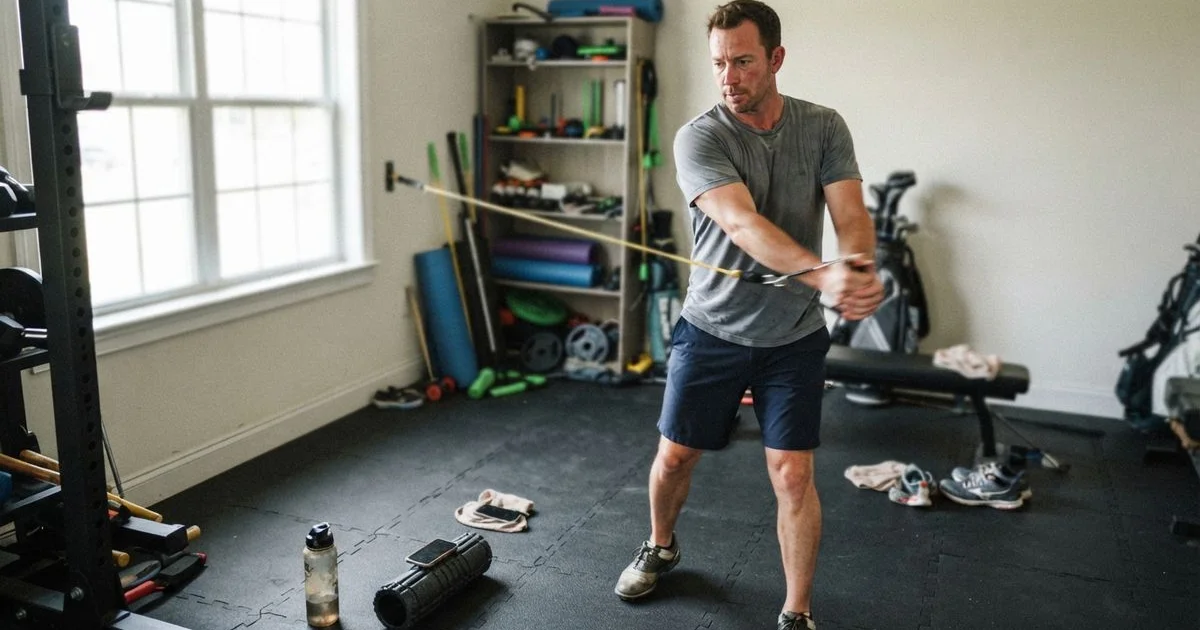
Standard golf coaching focuses on the swing itself: mechanics, sequencing, contact. Golf-specific fitness training works one layer deeper, on the physical capacity that either supports or limits your ability to execute that swing. A golfer with tight hips, for example, may physically be unable to rotate the way a coach is asking, no matter how many times they’re told to “turn more.” A trainer working from a physical assessment can identify that limitation and build a program to address it directly, which often makes the swing changes taught in regular lessons easier to actually achieve.
| What it targets | Why it matters for your swing |
|---|---|
| Hip mobility | Limited rotation here often forces compensatory strain through the lower back |
| Thoracic spine rotation | Restricted upper back turn limits backswing and follow-through |
| Core stability | Affects consistency and power transfer through impact |
| Shoulder mobility | Impacts swing plane and the ability to complete a full backswing |
What a session actually looks like
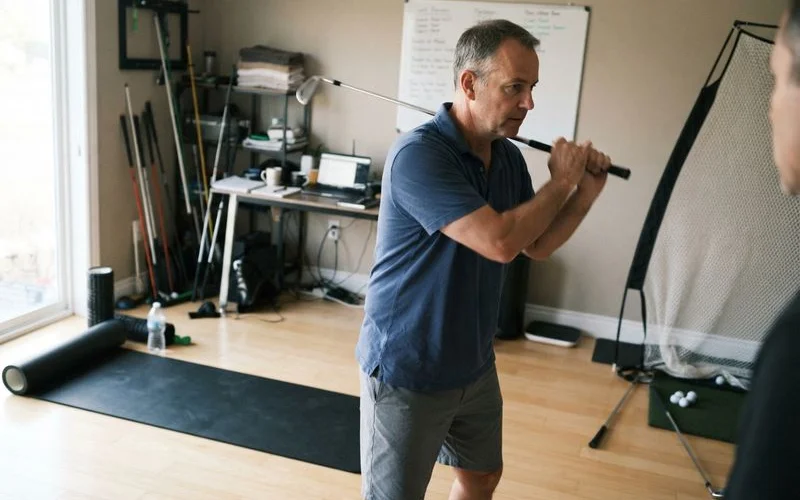
Most golf fitness programs start with an assessment rather than jumping straight into exercises. A trainer typically checks your range of motion in a handful of key areas, and many will review swing video alongside the physical assessment to connect specific limitations to specific patterns they see in your swing. From there, a program gets built targeting the gaps that assessment revealed, usually a mix of mobility work, strength exercises, and stability drills, rather than a generic golf workout applied the same way to every client.
Who benefits most
Golfers dealing with a specific, persistent swing fault that regular lessons haven’t fully resolved are often good candidates, especially if that fault seems tied to a physical restriction rather than a lack of understanding. Older golfers managing natural stiffness, and beginners whose limited flexibility is making it hard to even get into a proper setup position, also tend to see meaningful benefit. Advanced players chasing marginal power and consistency gains use it too, but the biggest, most noticeable improvements tend to show up for golfers whose physical limitations were genuinely holding their swing back, not just golfers looking for a small edge. Golfers recovering from or working around a swing-related injury often see fitness training help too; the guide to common golf swing injuries and prevention covers where that strain usually shows up.
Is it worth the added cost and time?
That depends on where your improvement is actually stalling. If you’ve had several lessons and keep hearing the same feedback (not rotating enough, losing posture, inconsistent contact) without much progress, a physical limitation might be part of the reason, and fitness training could open up progress that lessons alone haven’t. If your challenges are more about understanding mechanics or building repetitions, standard coaching is probably the better use of your time and budget first. It’s not an either-or decision for most golfers; many combine periodic fitness sessions with regular lessons rather than choosing one path exclusively.
How often sessions typically happen
Most golf fitness programs run on a weekly or biweekly cadence rather than a single one-off assessment, since mobility and strength gains build gradually over weeks and months, not in a single session. Expect an initial assessment followed by a program you largely work through on your own between sessions, with periodic check-ins to adjust exercises as your mobility improves or as new swing patterns emerge from your regular lessons.
Getting started
If you think physical limitations might be part of what’s holding your game back, look specifically for instructors or trainers who mention TPI training or a golf-specific fitness background, since that credential indicates they’re trained to connect mobility and strength assessments directly to swing mechanics. Compare providers on the full directory, and see our methodology for how reviewer feedback factors into how they’re scored.
FAQ
- What's the difference between golf fitness training and a regular lesson?
- A lesson works directly on your swing mechanics. Golf fitness training addresses the physical side, mobility, strength, and stability, that either enables or limits how well you can execute the swing your instructor is teaching.
- Do I need to be an advanced golfer to benefit from golf fitness training?
- No. Beginners with limited mobility or older golfers dealing with stiffness often see meaningful benefit, sometimes more than advanced players, since basic mobility work removes barriers to learning proper mechanics in the first place.
- What happens during a typical assessment session?
- Expect a trainer to test your range of motion in key areas (hips, shoulders, thoracic spine) and often review swing video to connect specific physical limitations to specific faults, before building a program targeting those gaps.
- Should I do fitness training instead of lessons, or alongside them?
- Alongside, generally. Fitness training addresses your physical capacity to execute a swing; lessons teach the swing itself. Most golfers see the best results combining both rather than choosing one over the other.