
Free and low-cost ways to improve your golf game in Charlotte
By Priya Whitfield · Updated 2026-06-23
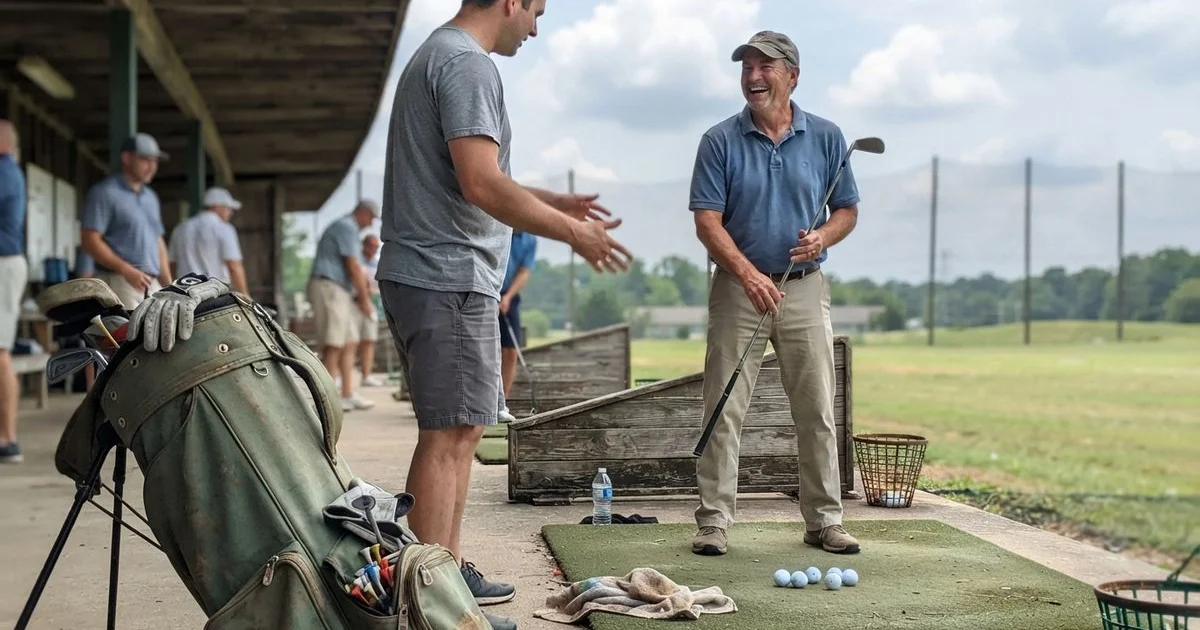
Lessons help, but they’re not the only path to getting better, and a full private coaching budget isn’t realistic for everyone. Here’s how to make real progress in Charlotte without spending much, and where it’s worth spending a little even on a tight budget.
Free and near-free practice options
Most public courses and driving ranges around Charlotte include putting greens and short-game practice areas that are free or bundled into the cost of a bucket of balls. These areas are underused relative to how much they can help, since putting and chipping account for a large share of most golfers’ scores but get far less deliberate practice than full swings. Spending even twenty minutes a week specifically on putting, with no coach and no equipment beyond your putter, is one of the higher-return, lowest-cost habits available.
| Resource | Typical cost | Best for |
|---|---|---|
| Public course putting/chipping green | Free or bundled with range fee | Short game repetition |
| Range bucket of balls | Low cost per session | General ball-striking practice |
| Group clinics | Lower per-person cost than private | Fundamentals, social learning |
| Introductory or seasonal free clinics | Free, availability varies | Trying golf or a specific facility before committing |
| Video and instructional content | Free | Reinforcing concepts already taught in a lesson |
Group clinics stretch a limited budget further
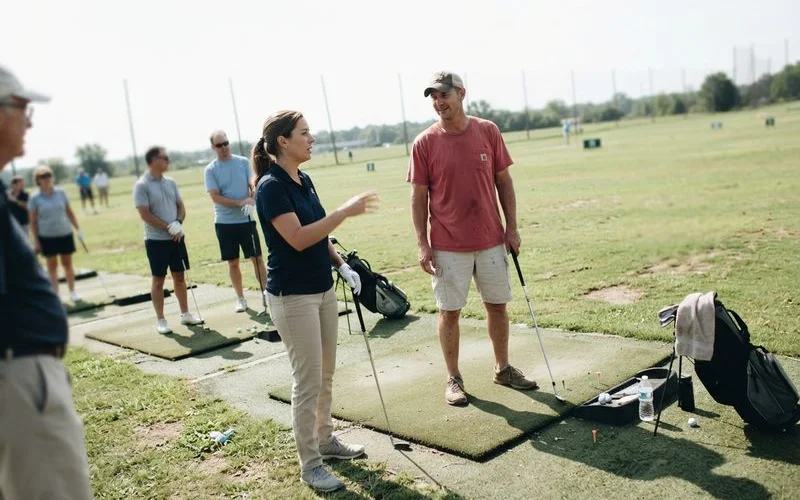
If you want actual instruction but can’t justify private coaching rates, group clinics are the more affordable middle ground. You still get real feedback from an instructor, just split across several students rather than focused entirely on you. Group formats work especially well for fundamentals like grip, stance, and basic contact, where the correction needed is often similar across several beginners at once. Several Charlotte academies and courses run seasonal group programs, particularly in spring and early summer, that cost meaningfully less per session than private time.
Self-directed practice that actually works
Not all practice is equally productive. Hitting range balls without a specific focus tends to reinforce whatever pattern you already have, good or bad, rather than improving it. A more effective approach is picking one specific thing to work on each session (grip pressure, tempo, a particular drill you already know) rather than just hitting balls at a target with no plan. Recording your own swing on a phone, even without professional analysis, can also help you spot obvious issues like poor posture or a rushed transition that are visible on video even without expert commentary.
Where a paid session earns its cost
If you’re stuck on a specific problem that isn’t improving no matter how much you practice, that’s usually the point where a single paid lesson delivers real value, even on a tight budget. An experienced eye can often spot in five minutes what would take weeks of guessing to self-diagnose. Think of an occasional single lesson as a course-correction tool rather than an ongoing expense: get the diagnosis and a specific drill, then return to free or low-cost practice to build the repetitions on your own.
Off-peak timing stretches a range budget further
Range and simulator bay pricing at most Charlotte facilities is cheaper during weekday daytime hours than evenings and weekends. If your schedule has any flexibility, shifting practice sessions to off-peak windows lets you get meaningfully more range time for the same weekly budget. This matters more than it sounds, since consistent, frequent practice tends to beat occasional longer sessions for actually building a repeatable swing.
Building a realistic budget plan
A practical approach for a limited budget: rely on free practice areas and group clinics for general improvement and social learning, and save for the occasional single private lesson when you hit a specific wall that self-practice isn’t solving. This keeps ongoing costs low while still giving you access to expert diagnosis when it actually matters. If budget is a concern because of your stage of life rather than your schedule, the guide to golf lessons for seniors covers what tends to change on a fixed income. Browse Charlotte’s group programs and low-cost options on the full directory, and see our methodology for how we evaluate providers.
FAQ
- Can I actually improve without ever taking a paid lesson?
- To a point, yes, especially on fundamentals like grip, putting, and general repetition. But a persistent swing fault is genuinely hard to self-diagnose, and even a single low-cost session can save months of practicing the wrong thing.
- Are there really free golf resources in Charlotte?
- Public course practice areas are often free or included in a bucket of range balls, and some facilities run free introductory clinics periodically. Check individual course and academy listings for current offerings, since these change seasonally.
- Is watching instructional videos online a good substitute for lessons?
- It's a reasonable supplement for general concepts, but video can't watch your specific swing and tell you what's actually wrong. Use it to reinforce what an instructor has already told you, not as a replacement for any feedback at all.
- What's the single best low-cost way to get better fast?
- One well-chosen single lesson focused on your biggest specific issue, paired with consistent self-directed practice on what that lesson covered, usually outperforms unstructured practice alone.